
Put the pressure reading at the right place and operating state
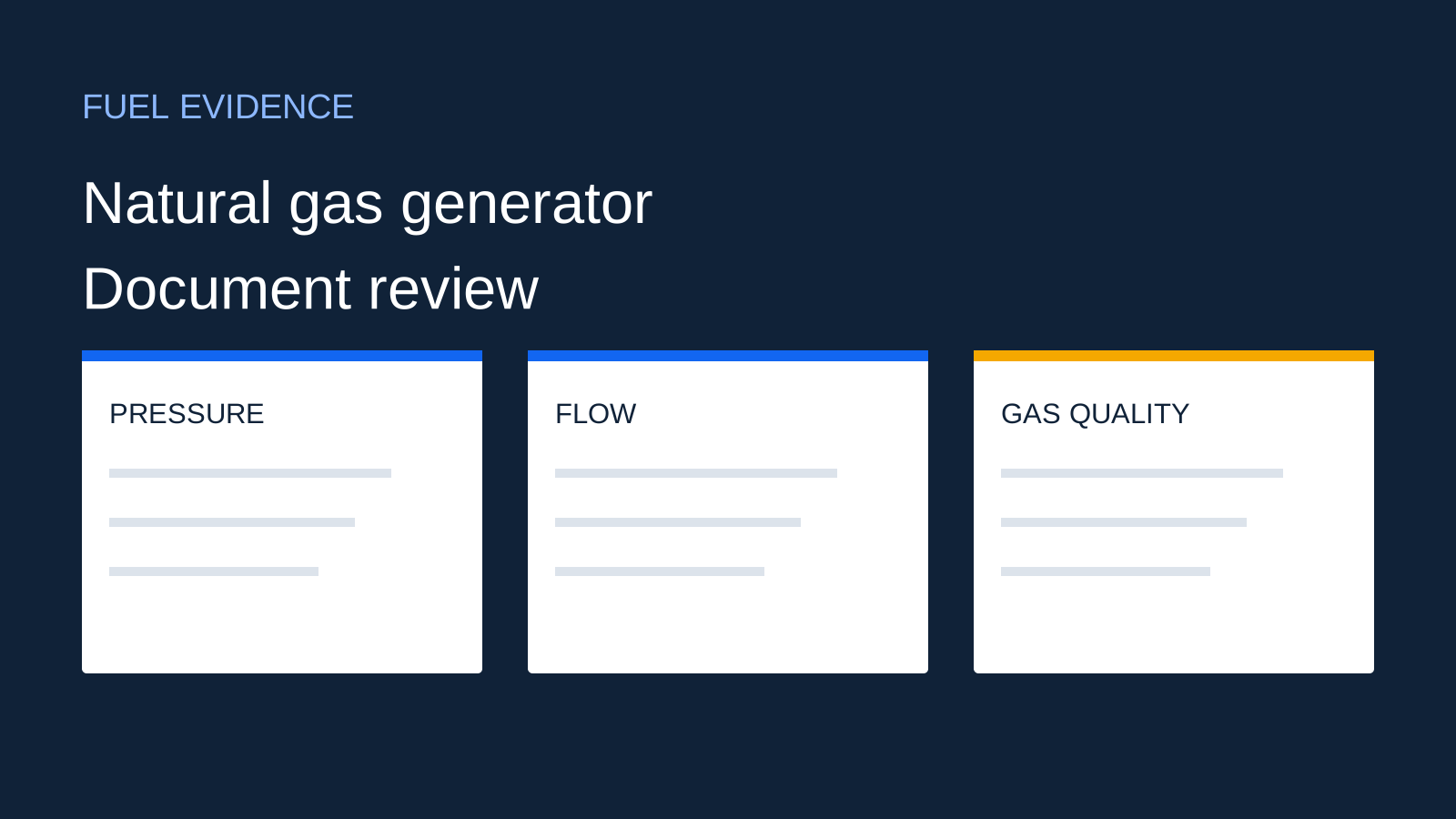
Start by identifying what each document describes. The utility may be describing its service boundary. The generator datasheet describes a requirement for the selected package. An installer’s record describes what was observed at a particular point and operating state. Keep those labels attached when the documents are brought together; do not reduce them to a single number marked “gas pressure.”
Generac’s industrial gas-supply design guide makes the context explicit: it identifies the generator pressure measurement point, distinguishes no-load and full-load running conditions from static lockup, and includes other facility demand. Those distinctions are useful when reading a proposal. Its numerical limits and installation instructions remain specific to the equipment and document; they are not GENKVA settings.
For a proposed GENKVA natural-gas generator, retain the exact engine and package reference with the fuel information. The current range uses Puchuang PC-series pairings, and configuration review requires pressure, flow and composition data. A pressure range found in another manufacturer’s manual cannot fill a missing field for that package.
If the only available reading was taken with the generator stopped, label it that way. It does not become evidence of full-load inlet conditions because the value looks reassuring. Ask the responsible installer and equipment supplier what operating evidence is still needed. This is a document-review step, not an instruction to connect a gauge, open a gas line or adjust a regulator yourself.
The same distinction matters before equipment is purchased. Mountaineer Gas, for example, asks customers for the proposed generator’s inlet requirement and full-load consumption before evaluating existing service. That is one utility’s process, not a universal rule or pressure specification. Confirm the process with the utility responsible for the actual site.

Check the basis before comparing flow numbers
Two flow figures are not ready to compare merely because both are labelled “capacity.” One may describe the selected generator’s demand at a stated load; another may describe the service, meter or a piece of supply equipment. First establish what each number belongs to and which operating condition it represents.
Then keep the unit and its reference basis. A volume-per-hour figure is not an energy-per-hour figure. Where a document uses a standard-volume basis, retain the stated reference conditions rather than assuming every supplier uses the same convention. Do not strip prefixes, temperature conditions or pressure references from a copied table to make the numbers look comparable.
Use this small reading check before asking for a reconciliation:
| Information received | What still needs to travel with it |
|---|---|
| Generator fuel demand | Exact package, operating load, original unit and stated fuel basis |
| Available supply flow | Boundary described, relevant demand from other users and the conditions attached to the figure |
| Converted or calculated value | Original input, conversion basis, person responsible and any assumption still unconfirmed |
For example, a quotation may contain a volume figure while a utility document expresses an energy rate. Treat that as an unresolved comparison, not as a reason to choose a convenient heating value from the internet. Have the supplier or appropriately qualified project party reconcile the two and retain the original records alongside the result.
The gas itself is part of this context. Cummins’ gas-analysis interface labels heating value with volume units and reference conditions. The useful lesson here is to preserve that basis with a calculation—not to adopt the tool’s displayed inputs, outputs or conventions as the site’s measured fuel data.
Separate the gas analysis from the fuel-acceptance decision
A gas report and an engine approval answer different questions. Start with the source of the input: which gas supply the analysis represents, when it was obtained, and which fields were actually reported. If the document belongs to another site or an unidentified example, leave that gap visible. Reformatting it with the project name does not make it representative.
The Cummins tool also illustrates the distinction between fields. Composition is entered in mole percent, while heating value, specific gravity, methane number and Wobbe index appear as separate outputs. It also includes engine and application selections. A methane percentage therefore should not be copied into a methane-number field, and an output without its input basis is incomplete evidence.
This article has not submitted a gas analysis through that tool. More importantly, a Cummins interface does not establish fuel acceptance for a Puchuang engine. The selected engine maker must supply the applicable requirements and determine how the proposed gas relates to them. Do not replace that review with a universal methane-number target, a generic contaminant limit or another engine family’s example.

When an analysis is incomplete, a useful next response is a precise question: which input is missing, who can provide it, and whether configuration remains provisional until it is resolved. Keep a supplied value, an assumption and an engine-maker decision visibly separate. That makes the enquiry more useful without pretending the paperwork already proves operating suitability.
Sources and limitations
This is a desk-researched guide to reading fuel-supply evidence, not a gas-system design, installation or commissioning procedure. The document map and comparison table are editorial aids, not customer test records. Applicable local requirements and the selected equipment’s current documentation remain separate project responsibilities.
- Generac: Natural Gas Supply System Design Guide, revision A, April 9, 2025. Used for measurement and operating-context distinctions, not its installation settings.
- Mountaineer Gas: Emergency Generators. A service-area example of the information requested before utility evaluation.
- Cummins: Gas Engine Selection and Gas Analysis Tool. Field structure reviewed; no project analysis performed or engine suitability inferred.
Send the evidence you have—and identify what is still missing
For a GENKVA enquiry, include the proposed generator or engine reference, duty, pressure record with its location and operating state, flow information with its original basis, and a source-identified gas analysis. Mark unknown inputs as unknown. Request a fuel-specific configuration review so the next discussion can distinguish confirmed information from the evidence still required.