

The rating follows the duty, not the label
Standby, prime and continuous describe different operating duties and allowable loading. They are not interchangeable price labels for the same machine. Select the duty from utility availability, expected annual hours, load variability, average load, peaks, overload requirement and redundancy.
ISO 8528-1 supplies a common classification framework, but manufacturers can publish additional names and model-specific limits. The signed quotation must identify the exact definition, engine, alternator, speed, fuel, ambient reference and derating basis.
- Utility present and reliable, limited, or absent
- Emergency-only, normal variable-load, or base-load operation
- Expected annual hours and average load
- Largest load step, motor start and overload requirement
Standby power is for defined outage duty
Emergency standby power supplies a variable load while the normal source is unavailable, within the exact manufacturer's annual-hour and average-load conditions. It is not a default rating for routine daily production or sustained utility-parallel operation.
Size the system around the emergency load sequence, largest motor or UPS step, transfer scheme, autonomy, maintenance access and the consequence of one set being unavailable. Critical facilities can require redundancy instead of a larger single nameplate.
- Confirm the manufacturer's permitted hours and average-load rule
- List essential loads in their real connection sequence
- Check transfer, fuel autonomy, exercise duty and redundancy
- Do not assume an overload allowance unless the model sheet states it
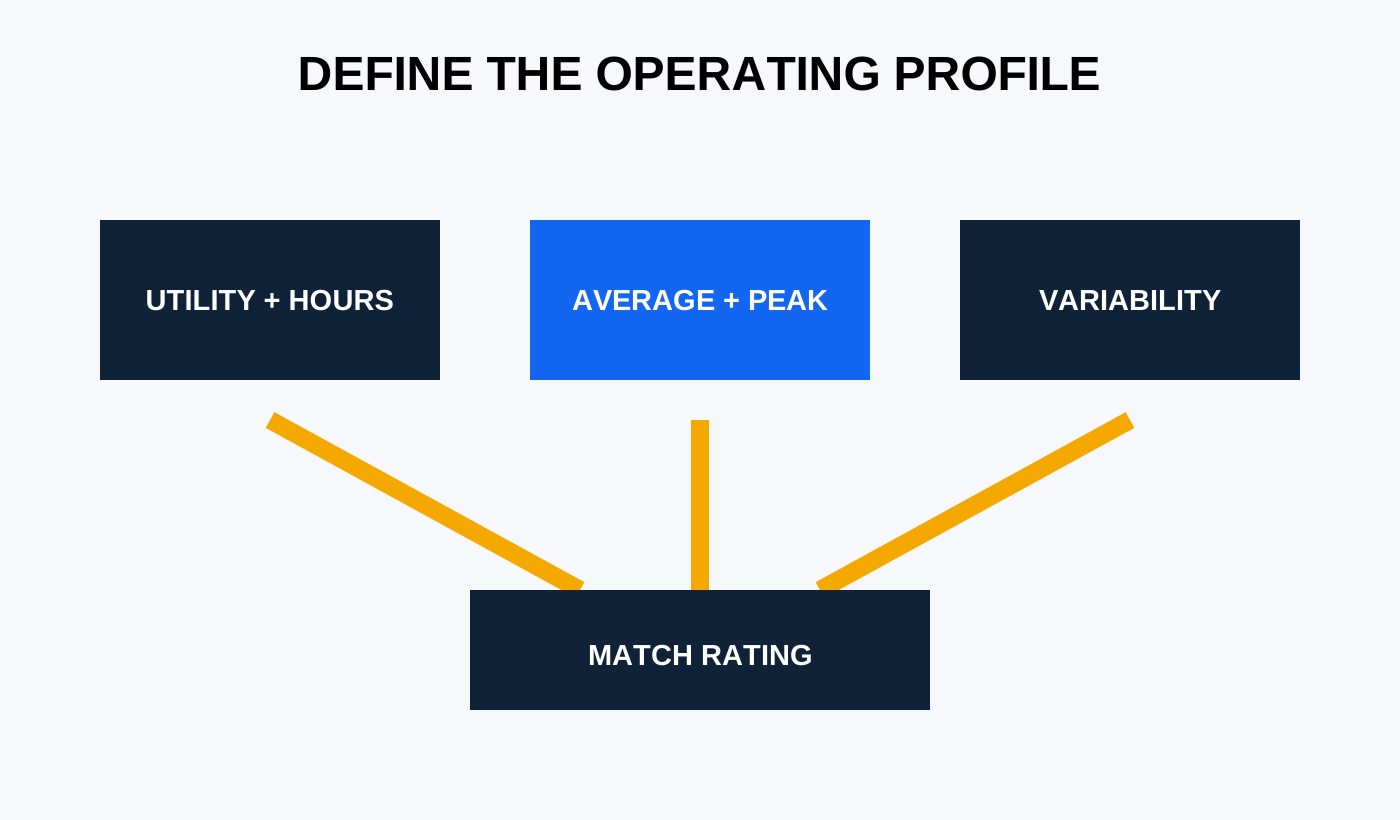
Prime power supports normal variable-load operation
Prime-rated sets serve applications where the generator is a normal power source and the load varies over time, subject to the manufacturer's permissible average power and any stated overload provision. Remote sites, construction and rental duty can fit this category, but the measured load profile still controls selection.
Record operating hours, average load, peak duration, cyclic pattern and load steps. A set that survives only the maximum peak is not necessarily matched to the full thermal, fuel and maintenance duty.
- Variable-load profile with timestamps or duty blocks
- Permissible average power over the stated averaging period
- Peak duration and model-specific overload provision
- Maintenance and refuelling plan for the expected hours
Continuous power serves a sustained defined load
Continuous rating is intended for extended operation at a defined, substantially steady load within the published limit. It is relevant to base-load duty where the generator carries a stable share rather than repeatedly chasing large peaks.
Continuous does not mean unlimited abuse, every ambient condition or unrestricted overload. Cooling, emissions, fuel system, alternator temperature, maintenance intervals and site derating remain part of the approved operating envelope.
- Define the base-load setpoint and expected variation
- Check whether utility paralleling or cogeneration is involved
- Confirm continuous-duty engine and alternator capability
- Apply altitude, ambient and cooling-system derating
Compare the duty boundary before the capacity number
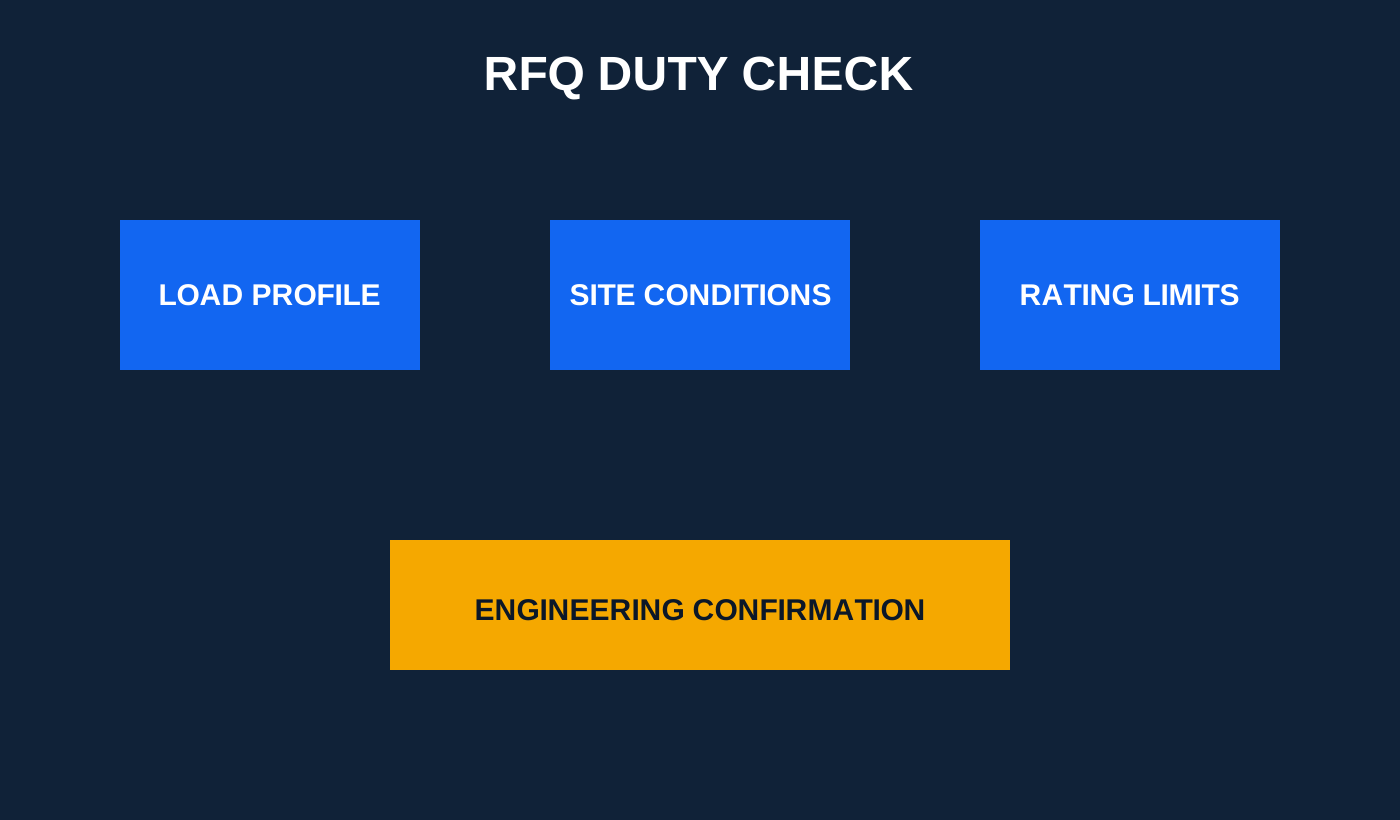
Put the same site profile beside each manufacturer's definition. Compare permissible average power, limited hours where applicable, overload, load variability, power factor, ambient reference and maintenance assumptions before comparing kW or price.
Then validate real kW, apparent kVA, transient response and derating. A set can carry steady kVA yet fail voltage or frequency recovery during a motor start or large block load.
- Rating name and exact manufacturer definition
- Rated kW and kVA at the required voltage, frequency and power factor
- Transient acceptance criteria for the largest load steps
- Site derating, fuel quality, enclosure and cooling configuration
Write the duty into the RFQ and purchase order
Attach the operating profile: utility availability, annual hours, load table, average and peak demand, step sequence, motor starts, power factor, elevation, temperature, fuel, voltage, frequency, enclosure, noise, autonomy, redundancy and applicable standards.
Require the quotation to state the manufacturer rating definition and model-specific limits. Commission the delivered set against the approved protections, load steps and site conditions; do not accept a nameplate label as the complete duty proof.
- Signed load schedule and single-line diagram
- Manufacturer data sheet with rating and derating notes
- Approved general arrangement, fuel and cooling design
- Factory and site acceptance criteria tied to the duty
FAQs
Can a standby generator run continuously?
Do not assume so. Standby ratings carry manufacturer limits for outage duty. If the generator is a normal source, select and validate a prime or continuous duty against the exact model definition.
What is the difference between prime and continuous power?
Prime generally serves variable loads under stated average-power and overload conditions; continuous serves a substantially steady base load under its published conditions. Manufacturer definitions take priority.
Is prime power always lower than standby?
Often the numeric ratings differ, but there is no safe universal conversion ratio. Compare the same model, speed, voltage, frequency, ambient basis and manufacturer data sheet.
Which rating should I put in an RFQ?
Describe the utility source, operating hours, average and peak loads, variability, overload need, site conditions and redundancy, then require the supplier to state the matching manufacturer rating.
Does ISO 8528 replace the manufacturer data sheet?
No. ISO 8528-1 provides a common rating framework; the model data sheet and approved quotation define the actual product limits and any manufacturer-specific categories.
Sources and scope
This guide uses ISO 8528-1 as the classification framework and Caterpillar's published rating explanations as a manufacturer example. Exact GENKVA engine and generator-set data sheets, the approved quotation and local project requirements remain controlling.
Engineering review
Send us the duty and site conditions
We will match the RFQ inputs to a confirmed GENKVA capacity and fuel configuration for engineering review.
Request a generator quote