
Silent describes a package, not a magic number
A generator enclosure can reduce radiated noise by containing the engine and alternator, guiding intake and exhaust air, and limiting vibration transfer. It cannot remove every source. Fans, exhaust, structure-borne vibration, doors, louvers and nearby walls all affect what a neighbour hears.
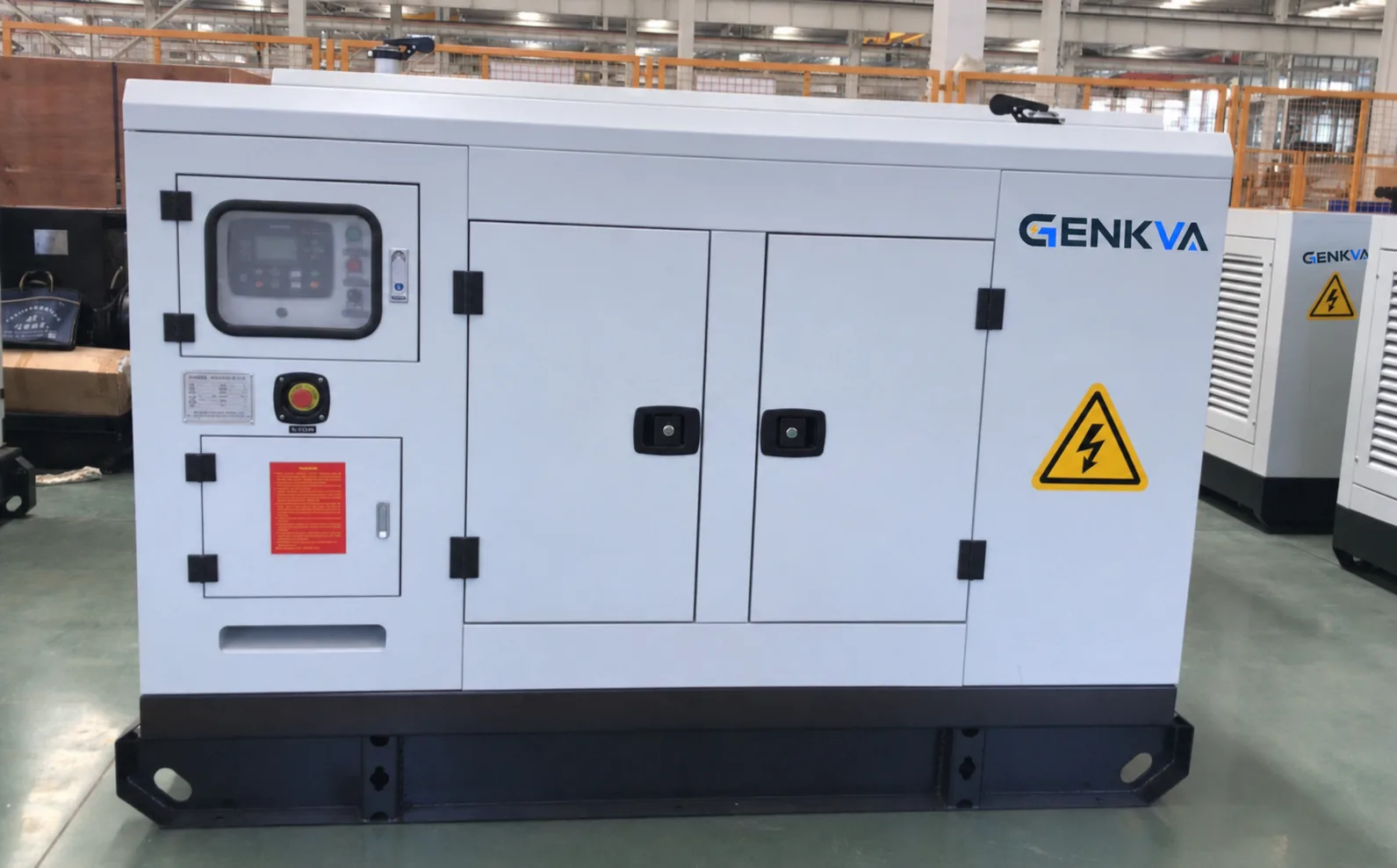
GENKVA's confirmed silent diesel and natural-gas ranges cover 37.5 to 250 kVA, corresponding to 30 to 200 kW at 0.8 power factor. Use the silent generator set range to compare configuration questions, not to assume one acoustic result fits every site.
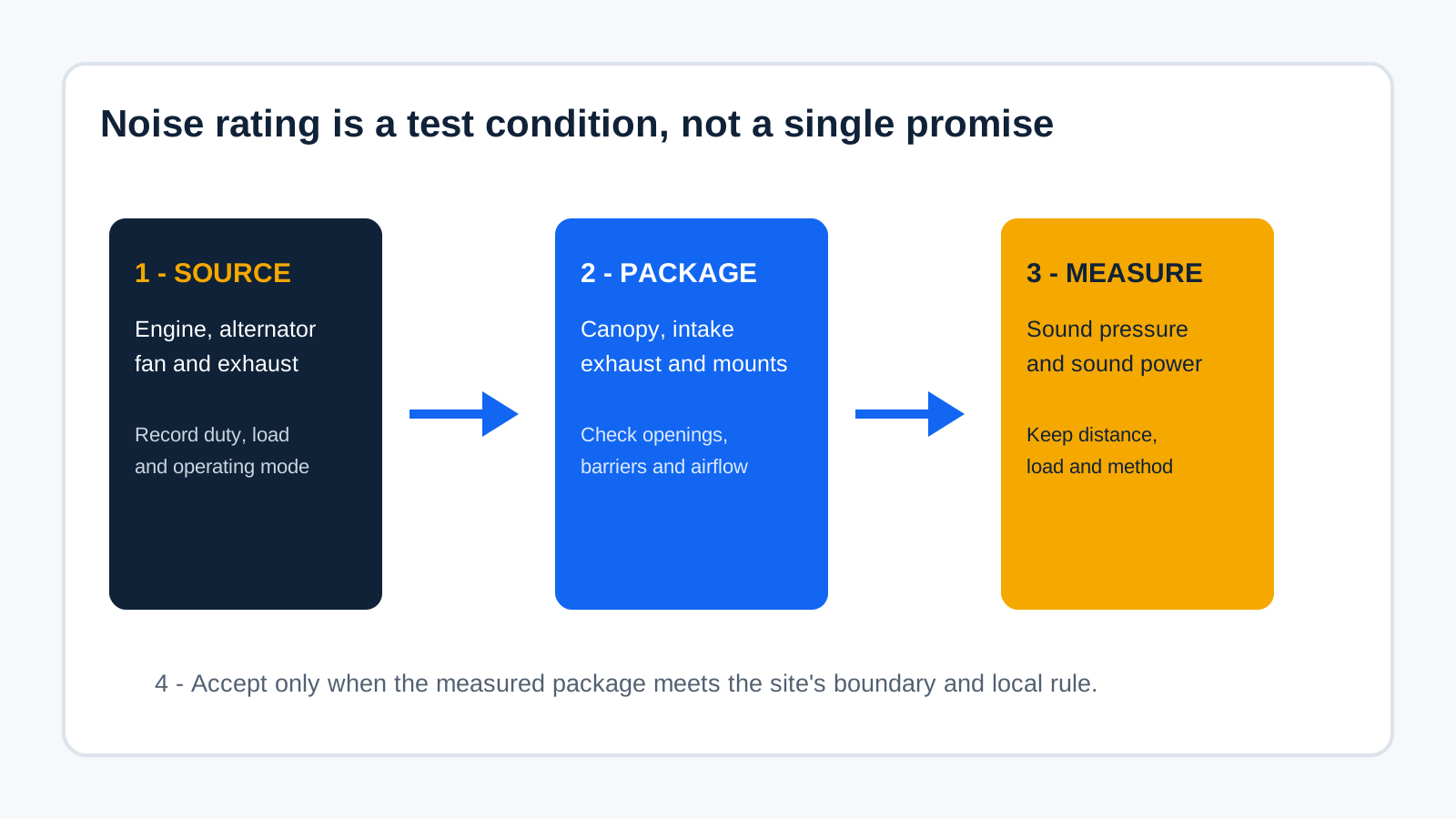
Read the noise test before comparing dB values
ISO 8528-10:2022 defines noise test codes for determining sound power and emission sound pressure at the workstation for engine-driven generator sets. Those are related but not interchangeable quantities. A report should state the metric, load, operating mode, microphone positions, test environment and uncertainty.
Ask the supplier to identify whether the rating is A-weighted, whether doors and panels were closed, and whether the cooling fan and exhaust were operating as they will on site. A figure without those conditions is a lead, not a compliance result.
| Question | Why it changes the result | Evidence to request |
|---|---|---|
| What quantity? | Sound power and sound pressure answer different questions. | Metric, weighting and standard. |
| At what load? | Engine and fan output changes with load and temperature. | Load %, duty and ambient conditions. |
| Where measured? | Distance, reflections and receiver position alter exposure. | Microphone layout and site boundary. |
| What is installed? | Louvres, exhaust, mounts and walls affect the final path. | General arrangement and installation notes. |
Check enclosure airflow, exhaust and vibration together
Noise control cannot be separated from heat rejection. A canopy with restrictive openings may raise internal temperature, trigger derating or shorten component life. Review intake and discharge paths, radiator airflow, hot-air recirculation, exhaust silencer, flexible connections and access panels.
Ask for the permitted ambient temperature, altitude correction, duty rating and service clearances. The quietest arrangement on paper is not a good purchase if technicians must remove the enclosure to reach filters or if an exhaust outlet points at a neighbouring building.
Validate the site boundary, not only the factory test
Define who hears the set: operators, offices, homes, hospitals or other sensitive receivers. Record the boundary, operating hours, maximum load, enclosure location, hard surfaces, walls and likely reflections. A factory test in a controlled environment cannot prove a planning or permit result at a different site.
For standby projects, include the load step and exercise schedule. For prime or continuous duty, measure the sustained operating condition. The generator installation checklist helps keep ventilation, exhaust, electrical and access questions in the same review.
Protect serviceability so quiet operation lasts
Filters, belts, coolant, oil, batteries, mounts and exhaust components need inspection. A blocked filter or damaged louvre can increase noise and temperature together. Confirm the maintenance schedule, spare-parts numbers, local technician route and alarm or monitoring plan.
Include the service clearances and lifting points in the signed drawing. Ask how the canopy opens, where hot surfaces are guarded and how a technician can test the package without bypassing safety controls. Reliability is a quieter neighbour than emergency repair work.
Use this silent-generator buyer checklist
- Noise target: boundary, receiver, operating hours and local rule.
- Measurement: sound power or pressure, weighting, distance, load and standard.
- Package: canopy, louvers, fan, exhaust, mounts and access.
- Thermal limits: ambient temperature, altitude, derating and airflow.
- Fuel and duty: diesel or natural gas, standby/prime/continuous and load profile.
- Installation: foundation, vibration isolation, exhaust discharge and reflections.
- Service: clearances, filters, parts, technician access and monitoring.
- Acceptance: installed test under representative load with documented method.
Once the inputs are known, use the GENKVA quotation path and attach the required noise and installation evidence. A supplier should be able to say what is confirmed, what is assumed and what still needs a site test.
FAQs
What does silent generator set mean?
It usually means the generator is supplied with an acoustic canopy or enclosure intended to reduce noise. The result still depends on the test method, load, distance, site reflections, airflow openings and installation.
Is a lower dB number always quieter on site?
No. Compare the same acoustic quantity, test distance, load, operating mode and measurement method. ISO 8528-10 distinguishes sound power and emission sound pressure at the workstation.
What should a supplier include in a noise report?
Ask for the exact package, operating load, test standard or method, microphone positions, environment, sound metric, uncertainty and any open doors, fans or exhaust conditions.
Can a silent canopy reduce generator performance?
An enclosure can change airflow, heat rejection, service access and exhaust routing. Confirm the package's derating, ventilation and temperature limits under the intended duty.
How should I check noise at my site?
Define the boundary and sensitive receivers, then measure the installed package under representative load with a competent tester. Local rules and permits govern acceptance.
Send the site brief
Request a comparable silent-generator configuration
Share duty, load, location, noise boundary, fuel preference and service constraints. We will keep unknowns visible for engineering review.
Request a generator quoteSources and scope
This guide uses ISO 8528-10 for the distinction between sound power and emission sound pressure, plus general installation and measurement practice. Local permits and the exact project test method take priority.