
Running kW is only the steady-state check
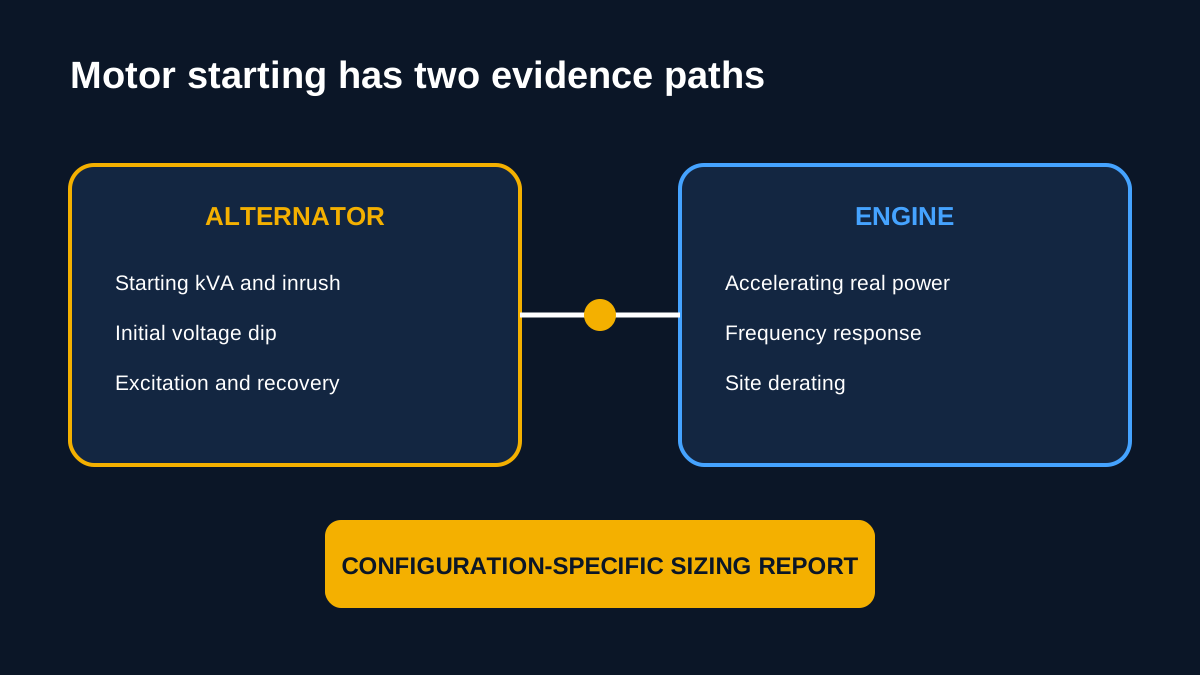
Running kW describes real power after the motor reaches operating speed. It does not describe current while the rotor is stationary or accelerating. Engine, alternator, regulator and excitation system respond differently, so both real and apparent power matter.
Cummins’ application manual explains that locked-rotor current creates voltage dip and engine power demand rises as the motor accelerates. Caterpillar’s sizing guide likewise separates starting kVA, voltage restoration and driven-load effects. These relationships do not supply a final genset size for an unknown project.
Collect the motor and driven-load evidence
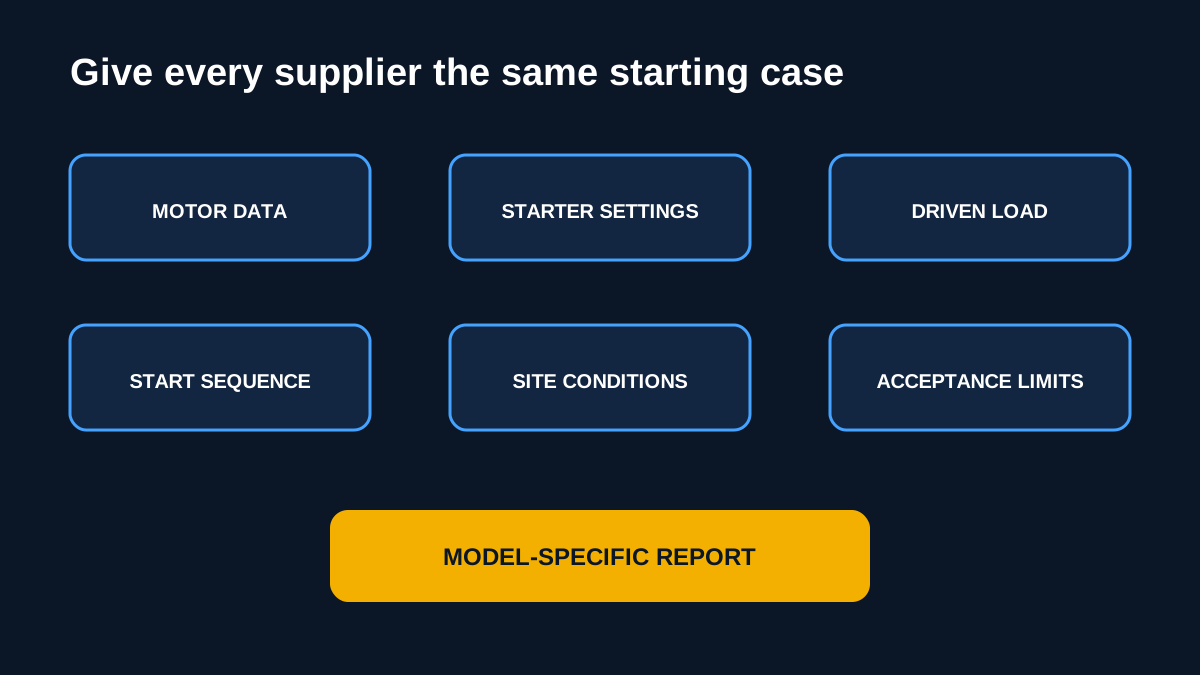
Create one row per motor with rated kW or horsepower, voltage, phase, frequency, full-load current, power factor and efficiency; locked-rotor current or kVA; starting method; starts per hour; expected acceleration; driven equipment; unloaded or loaded start; load torque and inertia; and controls that must remain energized during the dip.
Do not substitute a generic current multiple when exact data is available. Starting current and duration vary with motor design, voltage, starter and mechanical load. A high-inertia fan and a lightly loaded pump with the same running kW can impose different demands.
Build the worst credible load step
List what is already online when the largest motor starts: motors, lighting, controls, UPS, nonlinear loads, heaters and genuinely simultaneous future loads. Define the start sequence rather than summing everything by default.
| Input | Why it changes the answer | Evidence |
|---|---|---|
| Running kW and kVA | Steady engine and alternator demand | Load schedule or nameplate |
| Locked-rotor data | Initial starting kVA | Motor data or test curve |
| Starting method | Current and available torque | Starter or VFD documentation |
| Load torque and inertia | Acceleration duration | Driven-equipment data |
| Loads online | Actual transient step | Operating sequence |
| Allowed dip and recovery | Acceptance boundary | Equipment and project requirements |
| Site conditions | Possible derating | Exact manufacturer curves |
Use diversity only when controls or operations prevent simultaneous demand. Preserve the sequence so every supplier models the same case.
Check voltage dip and motor torque together
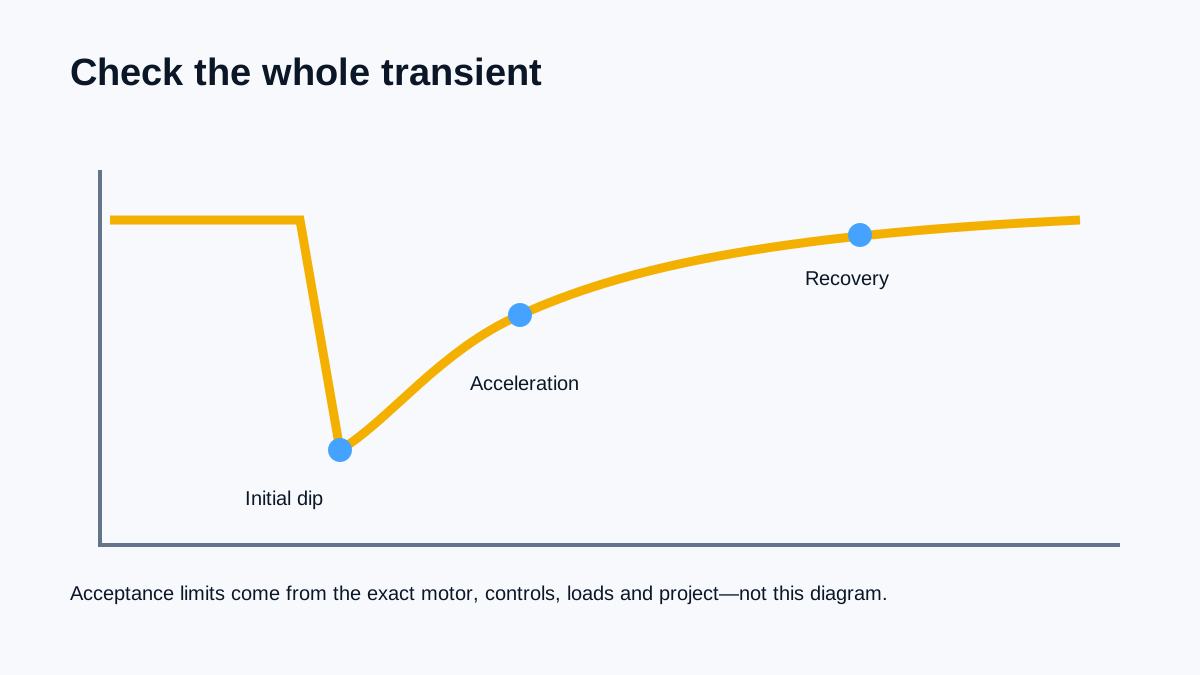
Starting current causes an initial dip before excitation fully responds. Voltage must recover far enough and fast enough for the motor to accelerate and for contactors and connected equipment to remain stable.
Cummins’ motor-starting capability paper explains that motor torque is strongly affected by terminal voltage and that recovery matters, not only the initial dip. The acceptable limit must come from the motor, starter, controls, sensitive loads, applicable rules and project specification.
Check engine frequency response too
The alternator may have sufficient starting kVA while the engine struggles with the real-power step during acceleration. Conversely, engine kW can look adequate while alternator reactance or excitation produces excessive dip. Require both voltage and frequency behavior in the sizing output.
Altitude, inlet-air temperature, enclosure restriction and fuel configuration can reduce capability. Use exact model derating data. The generator derating guide explains why universal correction factors are not final selection.
Reduced-voltage starting changes the problem, not for free
Soft starters, star-delta starters, autotransformers and VFDs can reduce line current, but they change torque, acceleration, harmonics, controls and bypass. Reduced-voltage starting can reduce starting kVA when reduced torque is acceptable. A motor that cannot accelerate its load is not solved by lowering current.
Send the exact starter configuration and settings. For a VFD, include rectifier type, harmonic characteristics, ramp, bypass and regenerative behavior. Do not treat “VFD” as a fixed reduction factor.
Ask every supplier for the same evidence
Ask for the selected engine, alternator and excitation; modeled running demand and largest step; predicted voltage and frequency dip and recovery; assumptions for current, starter, acceleration and loads online; site derating; protection and sequencing assumptions; and a configuration-specific report with limitations.
Caterpillar’s SpecSizer description includes load steps and optional voltage and frequency dip inputs, illustrating why one total-load number is insufficient.
Use the motor-starting calculator for preliminary organization, then the kW and kVA sizing resource. Request a quotation with the motor schedule, sequence, site and acceptance requirements.
Generator motor-starting FAQs
Why can a generator run a motor but fail to start it?
Starting current and accelerating load can be far more demanding than steady operation. The alternator may suffer excessive voltage dip or the engine may not recover frequency.
Is horsepower enough to size the generator?
No. Also collect voltage, phase, full-load current, locked-rotor or inrush data, starter, driven-load torque and inertia, sequence and dip or recovery limits.
Does a soft starter always allow a smaller generator?
No. It can reduce current but also available starting torque. Model the motor, driven load and settings together.
What is locked-rotor kVA?
It is apparent-power demand associated with locked-rotor current at the stated voltage. It helps evaluate alternator capability but does not replace the engine and acceleration check.
What voltage dip is acceptable?
There is no universal value. It depends on motor torque, starter, controls, sensitive loads, applicable rules and required recovery.
Should multiple motors be added together?
Model the real sequence. Include loads already online or genuinely starting together; use diversity only when it is enforced.
Sources and scope
- Cummins — Generator set application manual
- Caterpillar — Electric power sizing guide
- Cummins — Motor-starting capability
No manufacturer-neutral starting-current multiple, voltage-dip limit or oversizing ratio is claimed. Final selection remains configuration- and project-specific engineering work.