
Use a four-pass review instead of one price spreadsheet
A useful generator quotation review has four distinct passes. First, check completeness: did the supplier answer every mandatory RFQ line and identify the exact offered configuration? Second, check technical alignment: are rating, load, site and interface assumptions the same? Third, equalize scope and commercial boundaries: who supplies, ships, installs, tests and supports each item? Fourth, make the approval decision: pass, clarify, accept an alternative or reject.
Keeping these passes separate prevents two common errors. A technically attractive package cannot be approved while its delivery or warranty boundary is undefined. Conversely, a missing minor document copy should not carry the same weight as an unresolved site-output or voltage mismatch. The review must distinguish a material performance risk from an administrative item that can be closed before order release.
| Pass | Question | Output | Stop condition |
|---|---|---|---|
| 1. Completeness | Did the supplier answer the RFQ? | Response register and missing-item list | Mandatory line is blank or unsupported |
| 2. Technical | Does the offer fit the same operating basis? | Configuration and performance comparison | Rating, site output or interface is unresolved |
| 3. Scope/commercial | Are the boundaries and totals comparable? | Scope matrix and evaluated-price bridge | Required cost or responsibility has no owner |
| 4. Approval | Is one consolidated offer ready to order? | Decision log and approved revision set | Material deviation or acceptance term remains open |
Build one baseline RFQ before you compare supplier prices
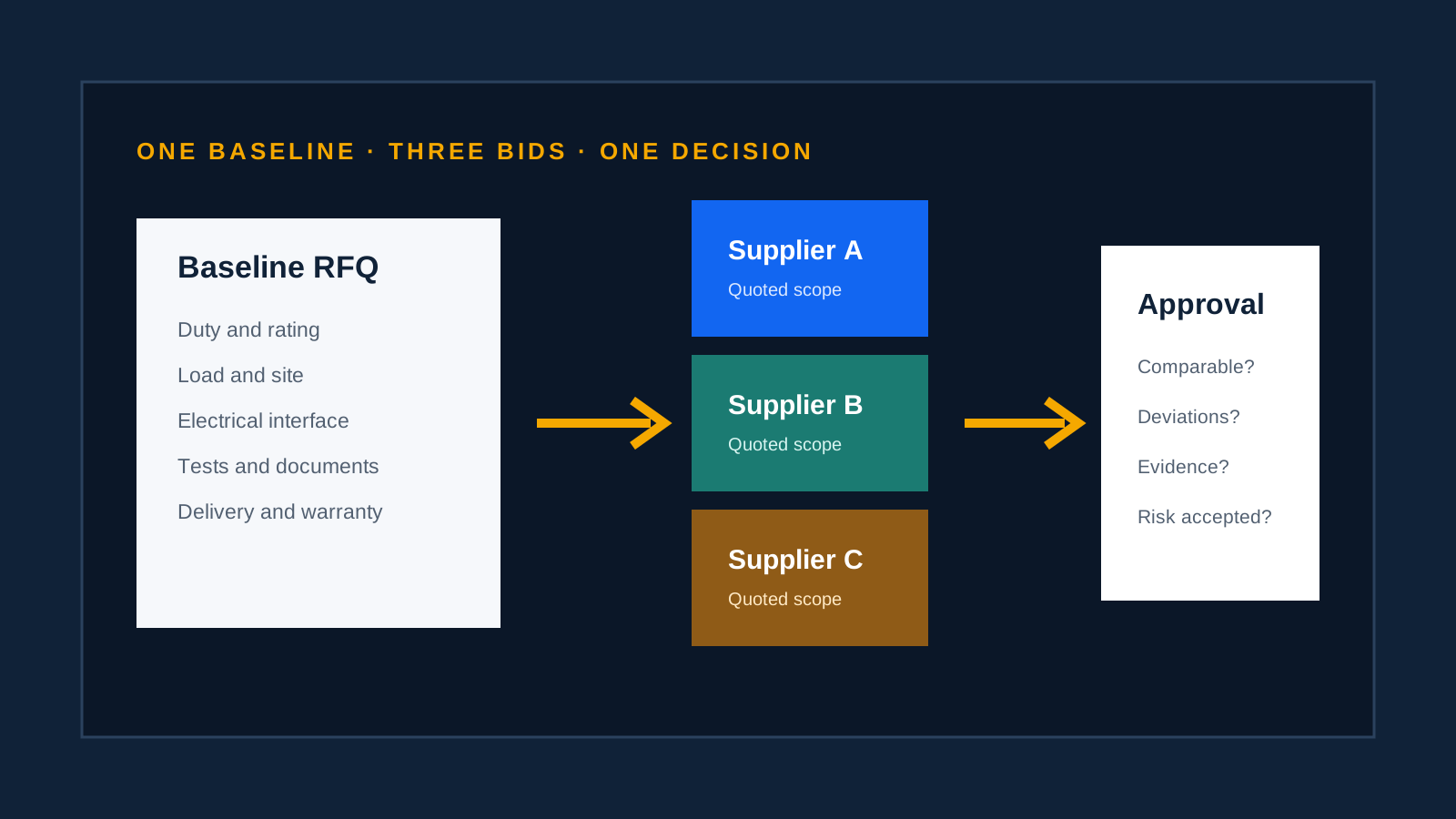
The baseline is the buyer-controlled version of the project. It should identify generator duty, rating basis, connected and step loads, largest motor or nonlinear loads, voltage, frequency, phase, power factor, site altitude and temperature, fuel, enclosure, control and paralleling requirements, applicable standards, acceptance evidence, destination and responsibility boundaries.
ISO 8528-1:2018 establishes classifications for generating-set application, ratings and performance to support understanding between manufacturers and customers. Cummins' T-030 application manual also treats load characteristics and site conditions as selection inputs. The procurement consequence is straightforward: a model name and headline kVA are not a complete comparison basis.
Use the GENKVA Generator RFQ Builder to collect the detailed project inputs. In the comparison file, assign each requirement an ID, one owner and one acceptance rule. Mark unknowns as supplier to confirm, buyer to confirm or project engineer to confirm; do not let every bidder fill the same blank with a different silent assumption.
| Input | Baseline record | Owner | Approval risk if missing |
|---|---|---|---|
| Duty and rating | Standby, prime or continuous; kW/kVA and reference basis | Project engineer + manufacturer | Offers use different output definitions |
| Load | Running demand, sequence, motor starts and nonlinear loads | Electrical engineer / buyer | Set may not accept transient demand |
| Site | Altitude, temperature, ventilation, fuel and location | Buyer / site engineer | Derating and cooling assumptions diverge |
| Interface | Voltage, frequency, phase, neutral and ATS/control signals | Electrical engineer | Generator and system may not connect as expected |
| Acceptance | Inspection, records, witness points, site tests and approver | Buyer / consultant | No shared release criterion |
| Delivery | Destination, Incoterm, unloading, site access and required date | Buyer / logistics owner | Lead times and totals describe different endpoints |
Normalize the technical basis before judging equipment fit
Place each bid beside the baseline rather than reading supplier PDFs in isolation. Confirm offered model, engine, alternator, controller, rating, output at site, voltage regulation, governing, load-step or motor-starting assumptions, cooling arrangement, enclosure, fuel system and electrical accessories. Use the exact manufacturer datasheet tied to the offered configuration and record its revision.
Do not treat a brand name as a configuration. Alternator options, controller versions, radiator arrangements, breaker ratings, enclosure types and emissions packages can differ under the same broad product family. For each substitution, require the supplier to state the reason, effect on performance or interface, price/schedule consequence and supporting drawing or datasheet.
Ratings and site output deserve separate rows. Record the quoted reference rating, then the declared usable output under the project's altitude, ambient temperature, ventilation and fuel assumptions. If the supplier has not performed or documented that application review, keep the line open. The generator kW/kVA resource can help frame terminology, but final sizing and transient acceptance belong to qualified engineering and the selected manufacturer's current data.
Build a bid-equalization matrix that preserves evidence
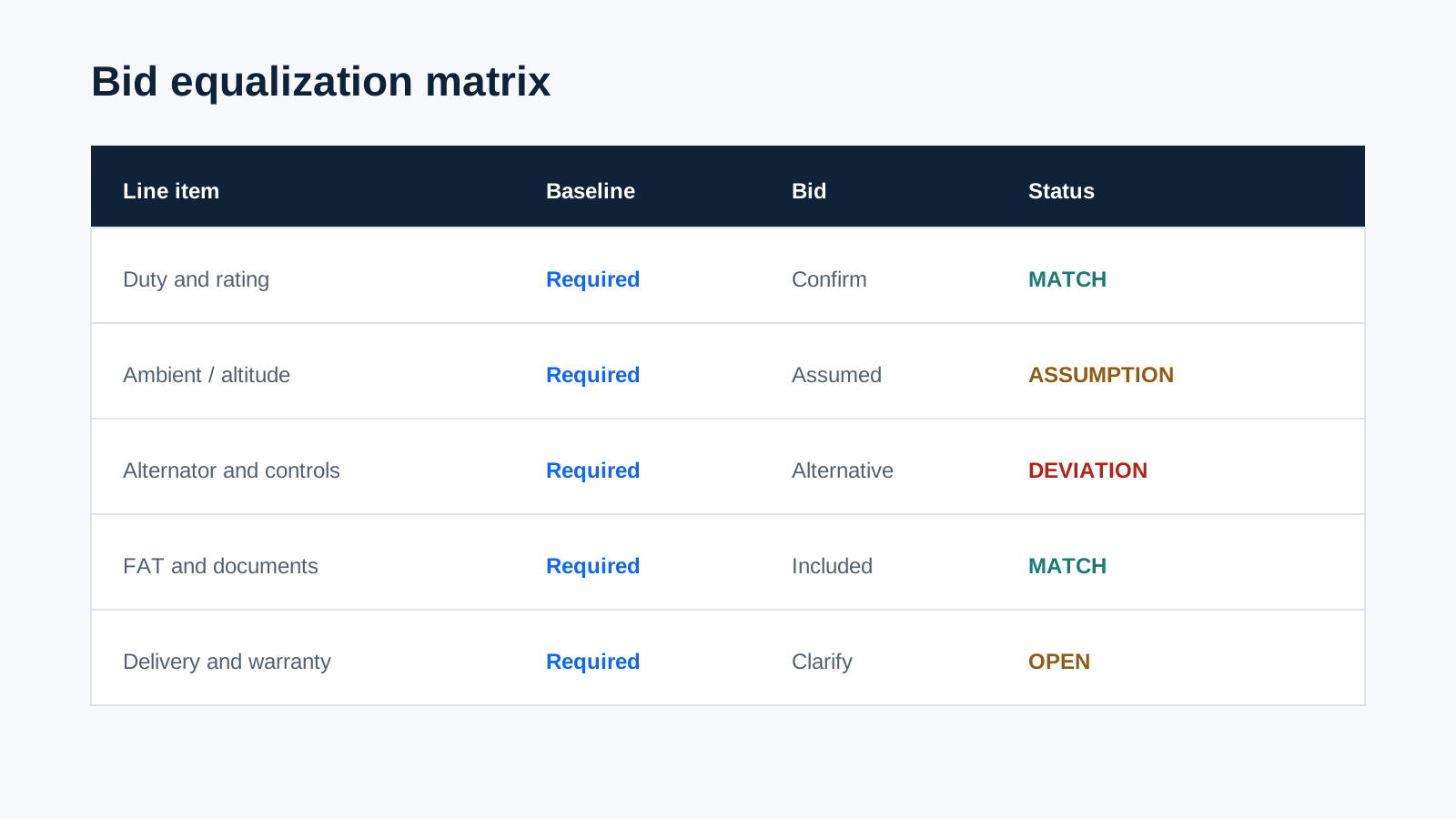
Give each baseline line one controlled status: match, alternative, omitted, assumed, open or not applicable. Beside that status, add the exact supplier evidence reference, owner, due date and any commercial adjustment required to restore the baseline. This produces a traceable decision rather than a colored summary with no source.
Use an evidence hierarchy. A final revised and signed offer outranks a clarification email; an exact configuration datasheet or approved drawing outranks a generic brochure; a supplier statement with no model/revision remains weak evidence. Never overwrite the original quoted text. Preserve what was offered, then record the clarification and final disposition in adjacent fields.
| Status | Meaning | Required action |
|---|---|---|
| Match | Response meets the stated baseline with evidence | Reference the exact datasheet, drawing or offer clause |
| Alternative | Different solution proposed | Assess technical consequence and total adjustment |
| Omitted | Required line not included | Name the responsible party and add cost/schedule impact |
| Assumed | Supplier filled an unknown | Buyer or engineer accepts or rejects in writing |
| Open | Response is incomplete or ambiguous | Issue a numbered clarification before approval |
| N/A | Requirement genuinely does not apply | Record why; do not leave a blank cell |
Separate included, optional, excluded and assumed scope
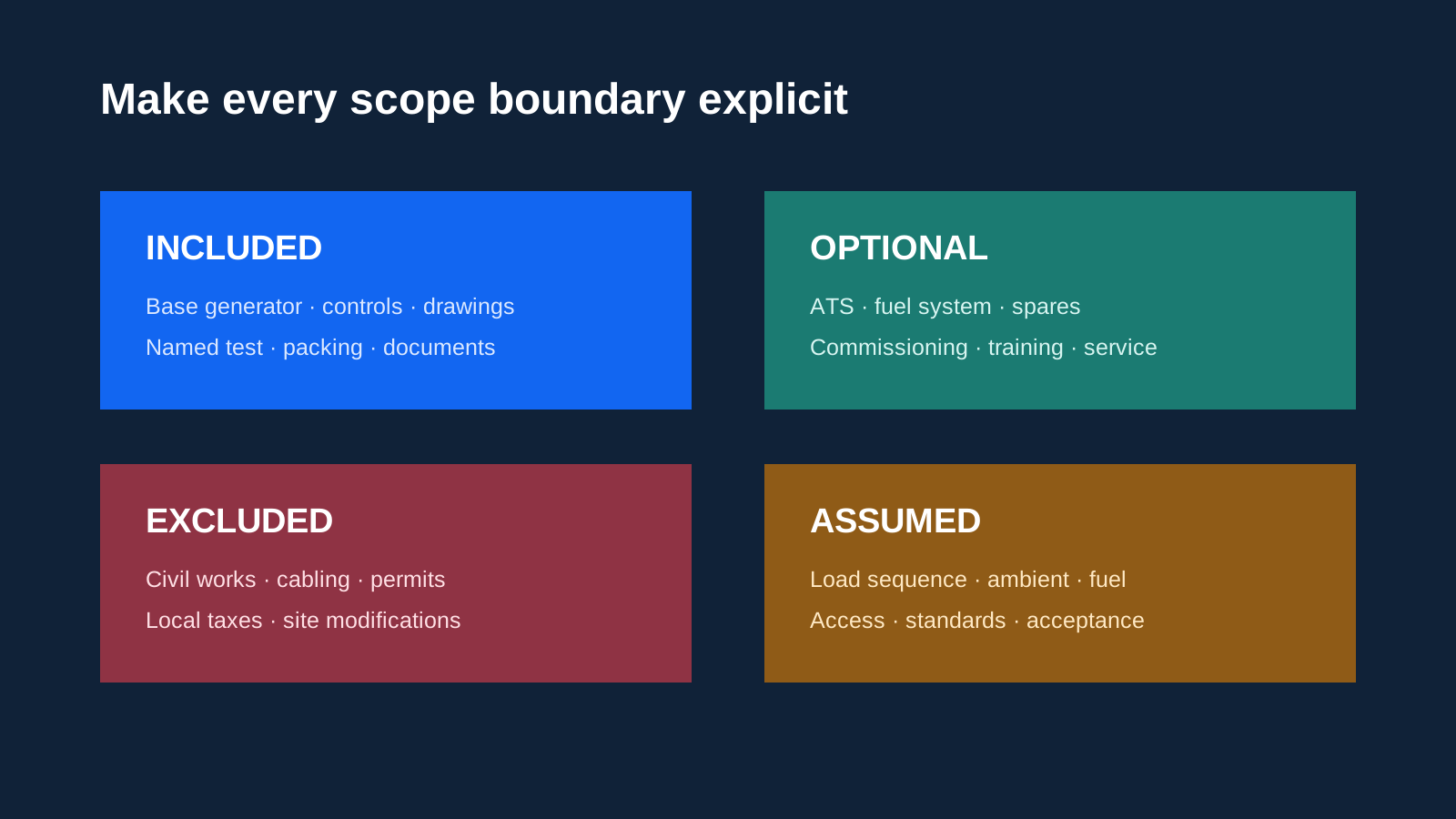
For each quotation, create four explicit lists. Included items are inside the quoted total. Optional items have separate prices, validity and lead time. Excluded items belong to another party. Assumed items state the conditions under which price, schedule and performance remain valid. A blank is not an exclusion; it is an unanswered requirement.
Run this exercise across the generator set, ATS, breakers, batteries and charger, day tank or fuel train, exhaust, cooling/ventilation components, acoustic package, cables, synchronization or monitoring, spares, special tools, packing, freight, supervision, commissioning, training, inspection, drawings, manuals and certifications.
Then map site work: foundation, room ventilation, external fuel storage, piping, earthing, cabling, permits, unloading, lifting, local labor, consumables, taxes and accommodation. A supplier may reasonably exclude these items; the buyer still needs an owner, allowance and schedule interface for them. Also confirm quantity and boundary—for example, “battery included” does not reveal brand, capacity, cables, rack, charger or cold-start basis.
Classify deviations by consequence, not by how easy they are to explain
Require suppliers to list every deviation from the RFQ in one schedule. The log should identify the RFQ clause, baseline requirement, offered response, technical effect, commercial effect, schedule effect, evidence and the person authorized to approve it. Statements such as “our standard applies” or “equivalent offered” are not dispositions.
For a useful risk screen, adapt the procurement concept of materiality. The UNOPS Procurement Manual treats a deviation as material when it substantially affects scope, quality or performance, changes important rights or obligations, or would undermine fair comparison if corrected. For a private generator RFQ, translate that into three review levels; your own contract and procurement rules still govern the final decision.
| Level | Typical generator-quote issue | Decision |
|---|---|---|
| Red — block | Wrong or unclear rating; unresolved site output; incompatible voltage/frequency; mandatory safety or package scope absent; acceptance basis undefined | Do not approve until a compliant revision is technically accepted |
| Amber — clarify | Proposed equivalent component; optional documentation timing; alternate delivery sequence; minor interface detail awaiting drawing | Assign owner, due date and cost/schedule consequence |
| Green — closed | Requirement matched, or an alternative is explicitly accepted with exact evidence and incorporated terms | Reference the approved revision and lock the line |
Version-control the RFQ, supplier quotation, clarification answers and final offer. Close each deviation as accepted, rejected or incorporated into a revised offer. The approved purchase order should reference the exact accepted revisions so a later drawing or acknowledgement cannot silently restore an earlier assumption.
Bridge every quoted total to one evaluated price
Normalize currency and exchange-rate basis, taxes, delivery term, packing, transport boundary, insurance, unloading, payment milestones, validity, manufacturing lead time and the point at which delivery is considered complete. Separate factory lead time, transport time, customs responsibility, site readiness and commissioning availability. Do not mix a factory-gate price with a destination-delivered price in the same ranking column.
Make inspection/witness costs, certificates, drawings, manuals, commissioning, travel, accommodation, training, recommended spares and extended warranty visible. Confirm when warranty begins and what parts, labor, travel, response and destination support are included. A long warranty label with no remedy or geographic boundary is not directly comparable.
Keep the original supplier total unchanged, then build a visible bridge to the comparison total. Add only adjustments backed by the frozen RFQ and the stated evaluation method: mandatory omitted scope, accepted alternatives, common delivery boundary and separately stated buyer-supplied work. Mark uncertain allowances as estimates; do not hide them inside the supplier's number.
| Line | What to record | Control |
|---|---|---|
| Quoted total | Supplier total, currency, validity and revision | Never overwrite |
| Mandatory additions | Baseline items omitted or priced as options | Use supplier price or labelled buyer estimate |
| Accepted alternatives | Cost difference for an approved alternate | Link technical disposition |
| Delivery equalization | Adjustment to one freight/delivery boundary | State Incoterm and destination |
| Buyer-supplied scope | Work transferred to buyer or third party | Do not pretend it disappears |
| Evaluated total | Sum under the declared comparison basis | Not a guaranteed landed or lifecycle cost |
This approach reflects a broader procurement principle: compare evaluated costs only after checking responsiveness and applying a disclosed method. The World Bank plant procurement document, for example, separates substantially responsive bids, quantifiable nonmaterial adjustments and evaluated cost. It is a useful discipline, not a substitute for your organization's tender rules or legal review.
Send numbered clarification questions that force usable answers
A good clarification can be answered with a value, document reference, explicit inclusion/exclusion or revised clause. Ask one issue per number, cite the RFQ requirement and state the required response format. Avoid broad requests such as “please confirm compliance,” because a one-word reply will not identify the offered configuration or close the commercial effect.
- Rating: State the offered standby/prime/continuous rating, reference conditions and exact manufacturer datasheet revision.
- Site output: Confirm available kW and kVA at the stated altitude, maximum ambient and ventilation condition, with the applied derating basis.
- Load acceptance: Identify the largest accepted load step or motor-starting basis used for the proposal and any required sequencing.
- Electrical interface: Confirm voltage, frequency, phase, neutral arrangement, breaker rating and ATS/control signal boundary.
- Configuration: Name engine, alternator, controller, radiator, enclosure and emissions configuration; list every substitution.
- Scope: Mark each RFQ line included, optional, excluded or assumed and provide quantity/model where applicable.
- Testing: Identify included factory inspection or test records, witness availability, procedure approval and retest responsibility.
- Documents: Provide the drawing/manual/certificate register, format, language, submission timing and approval cycle.
- Delivery: State Incoterm, named place, packing, transport boundary, unloading responsibility and separate factory/transport lead times.
- Commissioning: State days, tasks, prerequisites, travel, accommodation, local labor and consumables included.
- Warranty: Confirm start trigger, duration, covered parts/labor/travel, exclusions and destination support route.
- Final offer: Reissue one consolidated quotation incorporating accepted clarifications and removing superseded statements.
Worked example: the lowest headline can become an unresolved bid
The table below is an illustrative index, not actual supplier pricing. Assume the buyer's baseline requires a site-rated package, ATS, defined factory records, delivery to one named destination and commissioning support. An index of 100 represents the lowest initial quoted total.
| Comparison line | Supplier A | Supplier B | Supplier C |
|---|---|---|---|
| Quoted price index | 100 | 108 | 104 |
| Technical basis | Matches after site-output clarification | Matches with named datasheets | Different rating/site assumption |
| Mandatory omitted scope | ATS +5; commissioning +3 | None | ATS +5 |
| Delivery equalization | +4 to named destination | +2 to same destination | +3 to same destination |
| Illustrative evaluated index | 112 | 110 | Unresolved |
| Decision | Technically acceptable; commercially second | Lowest acceptable evaluated total | Return clarification before ranking |
The example does not prove Supplier B is universally better. It shows the decision logic: Supplier C cannot be ranked while a material rating/site difference is open; Supplier A's omissions must be restored; Supplier B becomes the lowest evaluated acceptable offer under this one declared baseline. If scope, risk weighting or assumptions change, recalculate and preserve the new revision.
Apply technical, scope and commercial gates before approval
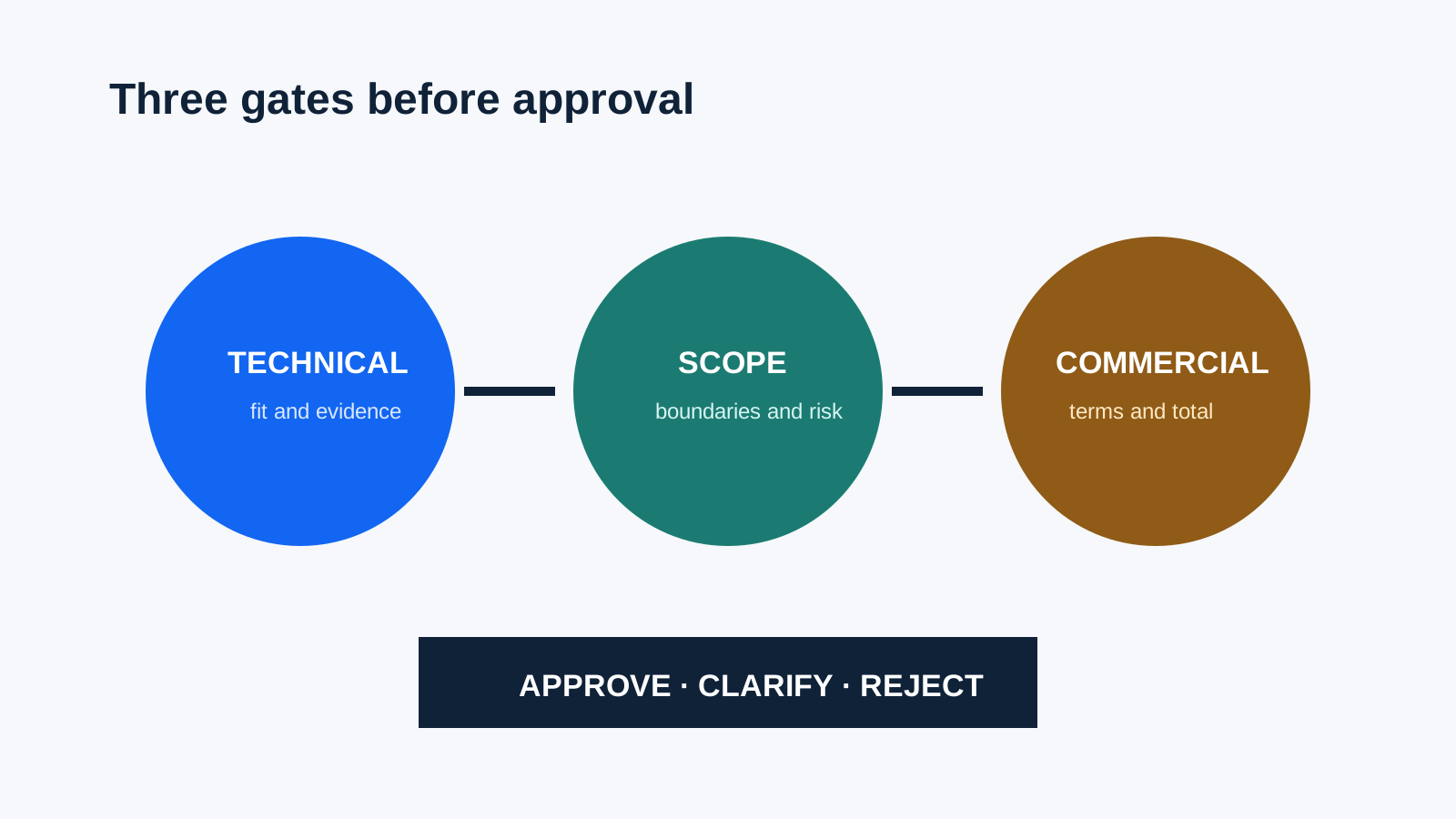
Technical gate: the offered configuration, rating, load/site basis and evidence are acceptable to the responsible engineer. Scope gate: included, optional, excluded and assumed items are allocated, and every material deviation is closed. Commercial gate: the evaluated total, delivery, payment, acceptance and warranty basis are approved. Document gate: one consolidated offer incorporates the accepted clarifications and is the version referenced by the order.
If any gate fails, return the numbered clarification list. Do not merge new answers into an old spreadsheet without preserving the source and version. Record who approved each red or amber line, when it was closed and which revised document contains the agreement. A meeting note may support the decision, but the final quotation or purchase-order package should carry the operative requirement.
The GENKVA quality process and commissioning support pages can help define evidence and handoff questions, but the project specification and signed order remain authoritative.
Use this generator quotation approval checklist
- Baseline frozen: duty, load, site, electrical, fuel, acceptance and delivery inputs have owners.
- Configurations named: engine, alternator, controller, breaker, cooling, enclosure and major options are identifiable.
- Site output confirmed: altitude, ambient, ventilation and other derating assumptions are explicit.
- Evidence linked: every important match or alternative cites an exact offer clause, drawing or datasheet revision.
- Scope equalized: included, optional, excluded and assumed items have quantities, owners and boundaries.
- Deviations closed: each exception has consequence, evidence, owner and authorized disposition.
- Acceptance defined: required inspection/test records, witness points, documents, language and approvals are stated.
- Delivery normalized: currency, Incoterm, named place, packing, freight boundary, lead time and unloading are comparable.
- Warranty usable: start trigger, parts, labor, travel, exclusions and destination support are clear.
- Price bridge visible: the original quote and every evaluated adjustment remain traceable.
- Final offer consolidated: the order references one accepted quotation, clarification set and document revision.
Use one baseline
Ask GENKVA for a comparable generator quotation
Share the load, duty, site, electrical, fuel, testing, delivery and support inputs. We will keep assumptions and open engineering items visible in the response.
Request a generator quoteFAQs
How do I compare generator quotations fairly?
Freeze one baseline RFQ, assign every requirement an owner and status, and place each supplier response against the same duty, rating, load, site, electrical, testing, document, delivery and warranty lines. Compare evaluated totals only after material deviations, omissions and assumptions are visible.
What is bid equalization for a generator project?
Bid equalization normalizes supplier offers to the same technical and commercial basis. It records matches, alternatives, omissions, assumptions and open items, then shows any transparent adjustment needed to restore the buyer's baseline.
Should I choose the lowest generator quote?
Not automatically. A lower total may exclude ATS, fuel equipment, testing, freight, commissioning, documents, spares or destination support, or it may use a different rating and site assumption. The relevant number is the lowest acceptable evaluated total under one stated basis, not simply the smallest headline.
What should block generator quote approval?
Block approval when the load or duty basis is unclear, site output is unresolved, electrical interfaces conflict, a mandatory scope line is omitted, material deviations remain open, or acceptance, delivery and warranty boundaries are not incorporated into a final consolidated offer.
Can an RFQ replace generator sizing and electrical engineering?
No. An RFQ records agreed inputs, responsibilities and required evidence. Qualified project engineers and the selected manufacturer's current application data still govern sizing, protection, installation, transient performance and code compliance.
Sources and scope
This guide provides a private-project procurement comparison framework. It does not replace project electrical design, manufacturer application review, tender rules, contracts, local law or the approved technical specification. Standards and supplier documents should be checked for the revision required by the project.